

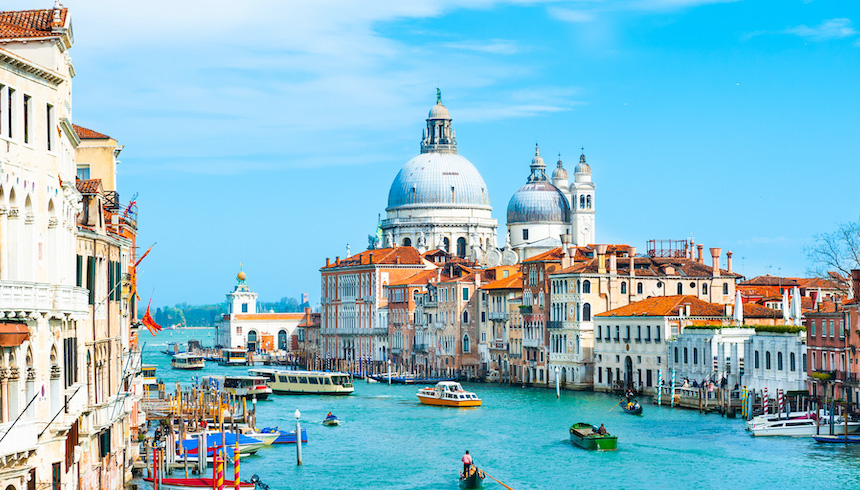
Grand Canal, Venice. Getty image. Photo credit: Olga Gavrilova.
Plan Venice Biennale 2026 with chic hotels, favorite art-world restaurants, museums and insider tips—an elegant, practical guide to experiencing Venice at its most inspiring.
The 61st International Art Exhibition of La Biennale di Venezia runs from May 9 to November 22, 2026 (preview days May 6–8) under the title In Minor Keys, curated by Koyo Kouoh. The main venues are the Giardini della Biennale and Arsenale di Venezia, with national pavilions and collateral events spread across the city.
Seasoned visitors often begin at the Giardini for the pavilions’ formal grandeur before crossing to the Arsenale for its raw, immersive scale. They are easily connected by vaporetto lines 1 or 2.
This is Venice at its most electric for the art world. Yet the city’s true magic lies in retreating into quieter corners: palazzi-turned exhibition spaces, golden-hour canal crossings and experiences that feel intimate rather than obligatory. Book Biennale tickets and restaurant reservations early, wear comfortable shoes for cobblestones and embrace a slower pace.
During the Biennale, check the official app or labiennale.org for collateral events at additional foundations and palazzi—many open only for these months.

Giardini della Biennale. Getty images. Photo credit: Stefano Mazzola.

Le Gaggiandre, Arsenale di Venezia. Getty images. Photo credit: Stefano Mazzola.
New for 2026
The two most anticipated hotel openings, Airelles Palladio and Orient Express Venezia, arrived just in time for the Biennale. One unfolds as a sprawling garden estate on Giudecca while the other revives a 15th-century palazzo in Cannaregio with echoes of the legendary train. Together, they mark the most significant refreshment of Venice’s hotel scene in years.
New foundations and exhibitions also debut, including the Fondazione Sandretto Re Rebaudengo’s island venue and the Dries Van Noten Foundation, adding fresh layers to the city’s contemporary dialogue.
Top Recommendation
Su Xiaobai’s Alchemical Universe

East West Bank is the sole corporate sponsor of Su Xiaobai’s Alchemical Universe, presented during the 2026 La Biennale di Venezia, running from May 9-November 22, 2026.
Among the standout collateral events of the 61st Venice Biennale, don’t miss Su Xiaobai’s major survey at the historic Palazzo Soranzo Van Axel (Cannaregio 6099). Curated by Stephen Little of Los Angeles County Museum of Art and with scenography by world-renowned architect Kulapat Yantrasast, the exhibition presents Su Xiaobai’s luminous lacquer paintings in dialogue with the palazzo’s grand interiors.
Best Hotels
Best Hotels
Historic grandeur meets understated elegance—ideal bases for Biennale days that spill into late-night conversations.
Airelles Palladio, Venice
The French luxury group’s first property outside France occupies three restored historic buildings plus a 16th-century church across 2.5 acres of private gardens on Giudecca. Sweeping lagoon and San Marco views, the city’s largest Guerlain spa, multiple pools and private Riva transfers make for a serene sanctuary.

Getty images. Photo credit: The Asahi Shimbun.
Orient Express Venezia (Palazzo Donà Giovannelli)
A restored palazzo in Cannaregio evokes the golden age of travel through refined design and quiet opulence. The legendary train, intimate rooms, a dramatic staircase and the signature Wagon Bar sit along historic canals.
Palazzo Venart
A secluded Santa Croce palazzo with a secret garden and private pier, Palazzo Venart is named for Venice and art. It houses the city’s only two-Michelin-star restaurant (Glam) and is far from the crowds but minutes from everything.
Ca’ Di Dio
A restored 15th-century hospice turned sleek modern boutique hotel in Castello, steps from the Arsenale—ideal for early starts.
Best Restaurants
Best Restaurants
Art insiders favor places with soul—where locals and curators mingle over flawless lagoon ingredients.
Ristorante Local (Castello)
Michelin-starred contemporary Venetian cuisine in a bright, relaxed setting with a show kitchen. Emphasis on sustainable local ingredients and an extensive organic wine list for thoughtful, modern dining near the Arsenale.

Photos courtesy of Ristorante Local.
Ristorante Glam (at Palazzo Venart)
The city’s most acclaimed fine-dining room—two Michelin stars, inventive yet rooted in lagoon ingredients. Dramatic interiors and an artful tasting menu.
Ristorante Quadri
Historic elegance in Piazza San Marco. Modern Venetian cuisine with impeccable service and a wine list that rivals any museum collection. The rooftop terrace offers pure romance.
Osteria alle Testiere
Intimate (just 12 tables), passionately run and focused on the freshest seafood. No frills, just flawless execution—think razor clams and soft-shell crab in season. A local favorite and well-kept secret.
Antiche Carampane
Classic Venetian cooking elevated without pretension: no menu turistico (tourist menu) in sight. Hidden in San Polo, it’s the spot for razor clams, squid ink risotto and people-watching.
Ristorante Da Ivo (San Marco)
A small, character-filled trattoria long favored by celebrities—including George Clooney, who has dined here regularly (and even hosted his bachelor party). Enjoy excellent Tuscan-Venetian classics in an intimate atmosphere.
Trattoria alla Madonna
A beloved San Polo institution since the 1950s, steps from the Rialto. Family-run, zero pretension and legendary for ultra-fresh seafood prepared simply—spaghetti alle vongole, risotto al nero di seppia, and market-driven fish that changes daily. An art-crowd staple for its authentic vibe and generous portions.
Best Gelato
Best Gelato
Creamy, made daily with natural ingredients, and best enjoyed slowly by a canal, these gelaterias stand out for purity of flavor and timeless appeal.

Getty image. Photo by Alexander Spatari.
Gelateria Nico (Dorsoduro, on the Zattere)
The 1935 classic with sweeping Giudecca Canal views is home to the signature gianduiotto con panna (hazelnut-chocolate gelato topped with fresh whipped cream) and is legendary. Sit outside and watch the light change.
Suso Gelatoteca (near Rialto Bridge)
Artisanal with inventive yet balanced flavors (pistachio to seasonal fruit, excellent vegan options). Sleek displays and daily-made batches draw discerning locals and insiders.
Gelato di Natura (multiple locations, including convenient San Marco and Cannaregio spots)
All-natural ingredients, no compromises on quality. Inventive combinations—like ricotta-pistachio or dark chocolate with subtle spices.
Best Bars
Best Bars
Intimate, atmospheric spots for aperitivo or late-night reflection.
Harry’s Bar (San Marco)
The historic pilgrimage for a Bellini and Hemingway’s table—more iconic than intimate, but still essential Venetian lore.

A Bellini at Harry’s Bar, Venice. Photo from Alamy.
Bar Longhi at Gritti Palace (San Marco)
Timeless Grand Canal opulence with Murano chandeliers glimmering over flawless martinis. The refined gathering place for collectors and curators.
Il Mercante (San Polo, near Campo dei Frari)
Atmospheric storytelling interiors set the mood with globe-inspired cocktails.
Best Shopping
Best Shopping
Skip mass-produced souvenirs. Seek ateliers where craft meets contemporary taste.
L’Isola
🔗 L’Isola
Showroom for Murano glass by the legendary Moretti brothers. Sleek, sculptural pieces— vases, bowls and lighting that belong in a collector’s home.

Murano glass. Getty image. Photo credit: neirfy.
Pied à Terre
The definitive source for furlane—the velvet gondolier slippers every stylish Venetian wears. Handmade in vibrant or muted tones, with a serious cool factor.
Antica Stamperia Gianni Basso
🔗 Antica Stamperia Gianni Basso
Nestled in Cannaregio, this historic printing workshop still uses hand-operated presses to produce bespoke stationery, calling cards and ex libris (personalized bookplates).
Plum Plum Creations (Cannaregio)
Tucked in a quiet corner, this printmaking studio carries bespoke etchings, linocuts and illustrated Venetian scenes. Everything is made on-site with antique presses. It’s an intimate, personal kind of place that art collectors visit for one-of-a-kind pieces.
Studio Saòr
Founded by an architect, this atelier specializes in custom illustrations of Venice’s lesser-known architectural details and urban poetry. Perfect for a thoughtful, framed keepsake.
Nicolao Atelier (Cannaregio)
This workshop crafts exquisite historical costumes rooted in Venetian tradition. The showroom and atelier atmosphere have supplied theater, opera and discerning collectors worldwide.
Giberto Venezia
Handmade Murano glass sculptures and collectible objects by Count Giberto Arrivabene Valenti Gonzaga. Expertly crafted pieces that blend tradition with modern sensibility.
Casa Codognato
Since 1866, the house has created exquisite baroque-inspired jewelry with a gothic edge. Once worn by Elizabeth Taylor and Jacqueline Kennedy Onassis, it continues today under the direction of former Tiffany design director Francesca Amfitheatrof.
Best Museums, Galleries and Foundations
Best Museums, Galleries and Foundations
Beyond the Biennale, these institutions offer quieter art experiences—often with special programming during the exhibition.
Peggy Guggenheim Collection
In her unfinished palazzo on the Grand Canal, this is the essential stop for 20th-century masters (Pollock, Ernst, Giacometti). The sculpture garden and canal views are pure poetry.

Palazzo Venier dei Leoni. Shutterstock.com
Fondazione Sandretto Re Rebaudengo – Isola di San Giacomo
🔗 Fondazione Sandretto Re Rebaudengo – Isola di San Giacomo
Set on a historic island in the Venetian lagoon—once a medieval monastery and later a Napoleonic outpost—the foundation’s third venue opens May 7, 2026. The inaugural program features Matt Copson’s Fanfare/Lament (curated by Hans Ulrich Obrist), alongside collection highlights and outdoor installations. A parallel photographic series, Isola di San Giacomo 2022–2026, documents the island’s transformation and restoration.
Conceived as a self-sustainable site for ecological reflection and artistic experimentation, visits are by appointment only (email: venezia@fsrr.org).
Founded by the visionary collector Patrizia Sandretto Re Rebaudengo—often described as Italy’s Peggy Guggenheim—the project brings contemporary vision into dialogue with Venice’s layered past. As a friend of the family, I am especially excited to see this deeply personal endeavor come to life.

Eun Me-Ahn, Pinky Pinky Good 2024, San Giacomo Island, Venezia.
Photo credit: Jacopo Trabuio. Courtesy of Fondazione Sandretto Re Rebaudengo.
Punta della Dogana (Pinault Collection)
At the tip of Dorsoduro, Tadao Ando’s transformation of the old customs house hosts rotating contemporary exhibitions. Stark, dramatic, and always thought-provoking—often features major artists tied to the Biennale calendar.
Palazzo Grassi (Pinault Collection)
Grand Canal palazzo with ambitious thematic shows. Contrast between historic grandeur and cutting-edge art is electric.
Fondazione Querini Stampalia
🔗 Fondazione Querini Stampalia
A perfectly preserved Venetian palazzo with a modern intervention by Carlo Scarpa. Venetian masters upstairs, contemporary installations below—elegant and intellectually rich.
Ca’ Pesaro – Galleria Internazionale d’Arte Moderna
Modern art in a grand Baroque palace, including Klimt and the city’s own 20th-century collection. Less crowded, deeply rewarding.
Fondazione Prada at Ca’ Corner della Regina
Grand Canal palazzo in Santa Croce (former home of the Biennale’s historical archive) hosts bold, boundary-pushing temporary exhibitions that often align with the Biennale calendar. Think immersive, provocative contemporary work in a gloriously atmospheric setting. A must for anyone seeking the sharpest edge in Venice’s art scene.
Museo Fortuny (Palazzo Pesaro degli Orfei, San Marco)
Mariano Fortuny’s former Gothic palazzo studio is filled with his revolutionary pleated silks, iconic Delphos gowns, theatrical designs and paintings. A hidden gem for the fashion- and art-minded.
Fondazione Dries Van Noten
Opening in a 15th-century palazzo, the foundation debuts with the inaugural exhibition, The Only True Protest Is Beauty—a multidisciplinary exploration of craftsmanship that resonates deeply with the Biennale’s themes.
Palazzo Manfrin
Home to the Anish Kapoor Foundation, the palazzo features large-scale installations and architectural models during the Biennale period.
For Those Who Can’t Travel to Venice
🔗 Fine Arts Museums of San Francisco
Catch the spirit of the city through Monet and Venice at the de Young Museum in San Francisco (March 21–July 26, 2026). The exhibition reunites more than 20 of Claude Monet’s luminous Venetian paintings—Grand Canal scenes, palazzi, and atmospheric studies inspired by his 1908 visit—alongside related works by other artists, offering a vivid reminder that Venice’s light has long inspired profound artistic renewal.
As the last vaporetto hums across the lagoon and the lights of the Biennale pavilions fade, remember: In Venice, the greatest exhibition is the city itself—its alleys, its light and its quiet persistence. Move slowly, look deeply and let it linger.

Claude Monet, "The Grand Canal, Venice," 1908. Oil on canvas, 28 13/16 x 35 5/16 in.
(73.2 x 89.7 cm). Fine Arts Museums of San Francisco, Gift of Osgood Hooker, 1960.29.
Photograph by Randy Dodson, courtesy of the Fine Arts Museums of San Francisco.

Subscribe to the Reach Further Newsletter
Get inspiring stories in your inbox every month.
Thank you for subscribing to the Reach Further Newsletter.
Form submission issue
Please try to submit the form again.
You're leaving our website
East West Bank’s privacy and security policies do not apply to the website or app you’re about to visit, and we are not responsible for the products, services or content found there. Please review its terms of use, privacy and security policies to see how they apply to you.